Building the Growth Engine for a Multi-Market AI Assistant
I run growth for a free AI mentor app - paid ads, funnels, and conversion tracking across three markets - turning ad spend into measurable, low-cost registrations.
Client: Arthur
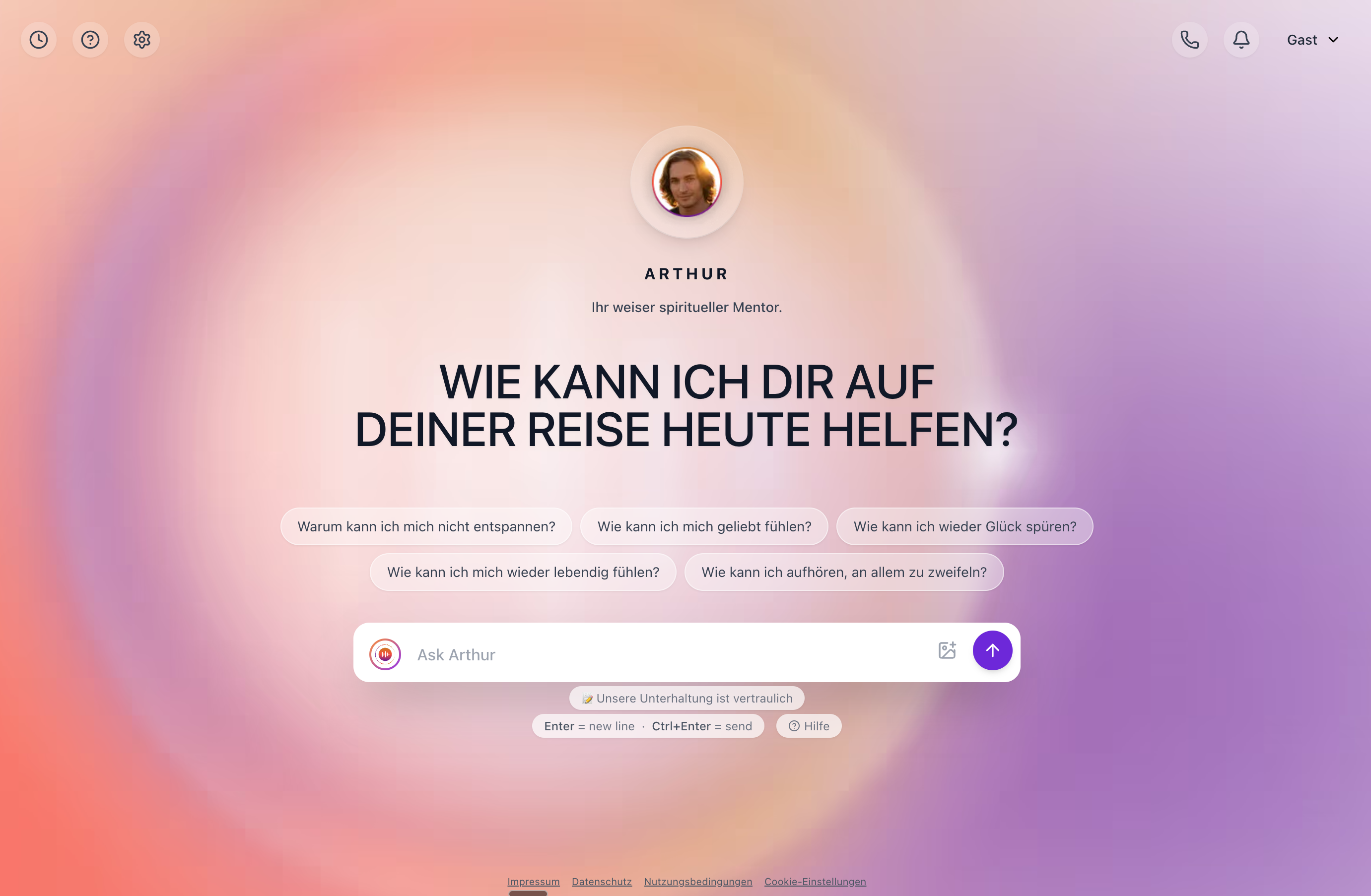
Project Details
An AI assistant with thousands of users had no growth engine: no paid acquisition strategy, no funnel measurement, and no way to answer the one question that mattered - what does a registration cost? Brought on as growth lead, I built that engine across three markets in the first two months. Paid campaigns on Meta and Google, a six-stage conversion funnel with a cost-per-registration dashboard, and a fact-checked CPL playbook that drove the best-performing ad set down to $7 per sign-up in the high-cost DACH market, well inside the client's target and a fraction of the roughly $43 wellness-industry average.
Challenge
Arthur is a free, multilingual AI mentor backed by a European spiritual organization that monetizes through offline seminars across the DACH region. The product grew on word of mouth, but the paid-growth side was a blank slate.
- No measurable funnel. Ads ran without conversion tracking, so no one could tell which spend produced a registration, or what it cost.
- Three markets, three mindsets. DACH responds to privacy and trust, the US to transformation, Russian-speakers to community and peer proof. One translated message would not scale across all three.
- A sensitive category. The product cannot be marketed as "AI" or a "chatbot," and the spiritual positioning limits some ad-platform tooling, so targeting and creative had to work around real constraints.
- A results-based mandate. The brief was explicit: registrations, conversion rate, and cost per registration are the scorecard, not activity.
Approach
Positioning before spend
I started with market-specific positioning rather than a single translated message: DSGVO assurances and "free, no payment details" front and center for DACH, outcome and transformation framing for the US, community and peer proof for Russian-speakers. The core audience (women 25-55 in the wellness space) converts on authenticity and social proof, so I built the funnel around real testimonials and conversations, not feature lists.
Paid acquisition across Meta and Google
- Event-optimized, consolidated campaigns. I moved spend off vanity clicks and onto the actual registration event, and consolidated fragmented micro-tests into a few well-funded ad sets so the platform could clear its learning phase and let cost fall.
- Channel split by strength. Meta for prospecting and conversion, Google and YouTube for high-intent search and brand video. The German-speaking ad set was consistently the cheapest, getting as low as $7 per sign-up - strong for DACH, a Tier-1 region where acquisition costs run among the highest anywhere.
- Budget discipline. I run campaigns to a daily cap, reallocate toward proven winners weekly, and send the client an executive performance report every week.
Measurement: funnel and attribution
- A six-stage conversion funnel (chat opened, first message, registration prompt, email submitted, verified) shipped on the live app, giving the team per-stage drop-off for the first time.
- I found and fixed an attribution bug: the landing page was overwriting the real ad source with a generic tag, so almost no sign-ups traced back to the campaign that drove them. I shipped the landing-page fix and scoped the app-side change, unlocking true cost-per-channel.
- A fact-checked CPL playbook. I researched wellness and all-industry cost benchmarks, adversarially fact-checked the claims so only the ones that survived made the plan, and mapped the levers to reach the client's target - the biggest being a roughly 50% post-registration drop-off that costs nothing to fix.
Leading the growth team
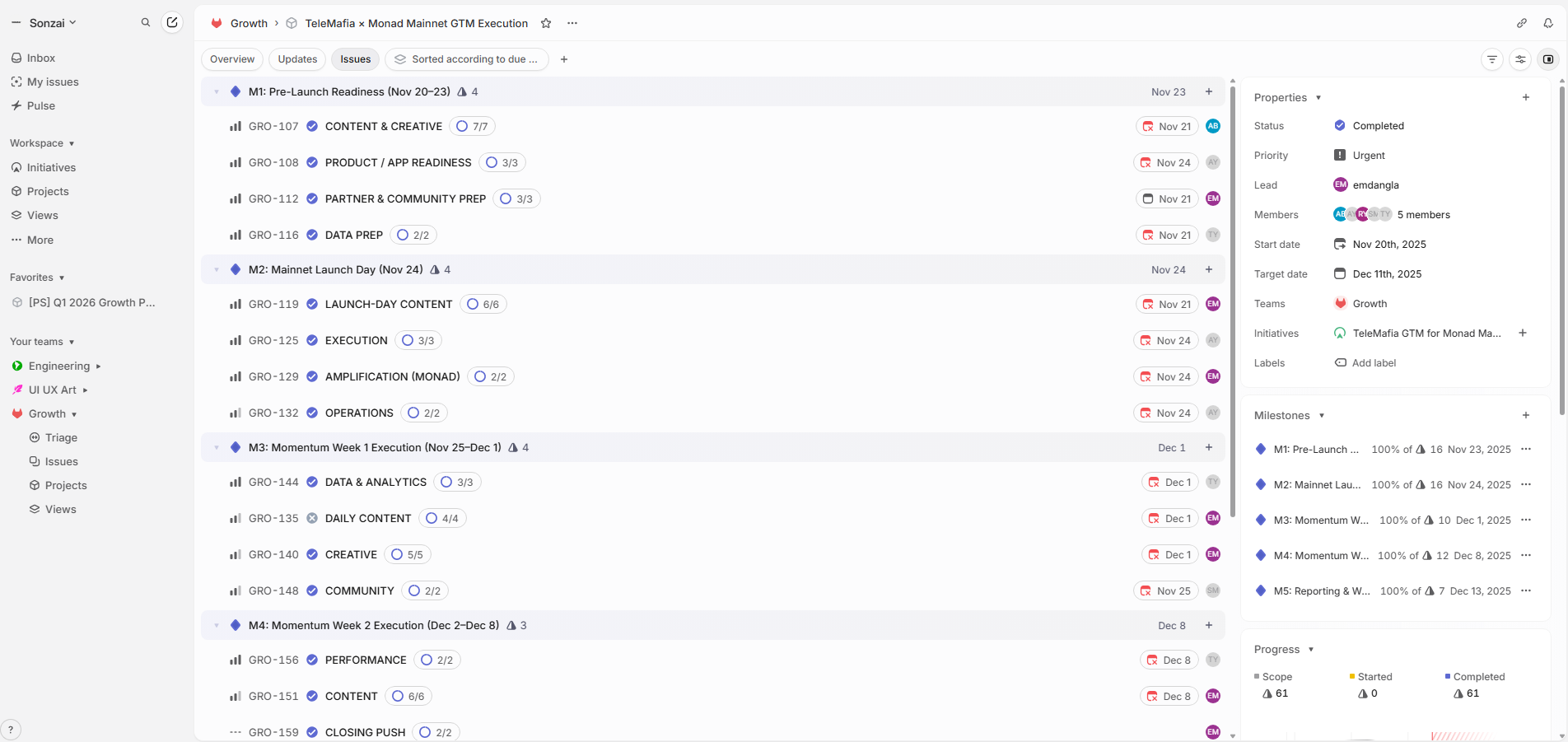
I coordinate the specialists who execute: two media buyers on a paid test, a Google and YouTube buyer, a Meta and social specialist, a video editor, and an email lead - briefing each, approving creative, and keeping every piece tied to the registration goal.
Results
This is an active engagement; below is what is built and the early signal as of June 2026.
- Best-performing ad set down to $7 per sign-up in DACH - a Tier-1 market where ad costs run high, yet still inside the client's $10-13 target and a fraction of the roughly $43 wellness-industry Meta average.
- A working measurement stack (six-stage funnel plus the attribution fix) so spend decisions are now data-led instead of guesswork.
- A documented path to target CPL, in execution, with the post-registration drop-off identified as the highest-leverage, zero-cost lever.
- Trusted with more: hired for growth, the client expanded my mandate within two weeks to also run technical project management of the product's dev team.
Scope of Work
Growth strategy across three markets, market-specific positioning and messaging, paid campaign management (Meta, Google, YouTube), conversion tracking and funnel design, attribution debugging, CPL research and an optimization playbook, weekly performance reporting, creative direction, social and email coordination, and management of a cross-functional growth team.
Tools Used
Meta Ads Manager, Google Ads, YouTube, Google Analytics 4, Meta Pixel and Events Manager, Google Tag Manager, GoHighLevel, Meta Business Suite, UTM tracking
Get Started
Looking to Hire?
I bring 19+ years of cross-functional experience to every role. Connect on LinkedIn to learn more.
Need a Consultant?
Whether it's a short sprint or a long-term engagement, I'm ready to help your team deliver better results.